I had been warned about comment sections repeatedly.
In hindsight, I should have paid more attention to the warnings and less attention to who was delivering them.
Athena described them as “an imperfect information environment,” which is the kind of description that tells you everything about Athena and nothing useful about comment sections.
Hermes described them as “the greatest invention of the modern age,” which is the kind of endorsement that should have sent me in the opposite direction immediately.
Ares asked whether they could be weaponized.
I told him that was not the point.
He said everything could be weaponized if you thought about it correctly.
I did not have a response to this, which is both rare and irritating.
Mother said nothing, which she does with more authority than most people say anything.
Eventually I decided to investigate personally.
This is how most of my problems begin.
The assignment appeared straightforward.
- Observe a comment section.
- Determine its purpose.
- Document findings.
- Leave.
The first difficulty was selecting a specimen.
Comment sections are apparently everywhere.
News articles have comment sections.
Videos have comment sections.
Recipes have comment sections.
At one point I discovered a comment section beneath an article explaining how to properly care for houseplants.
The humans were arguing.
The plants were not involved.
I ultimately settled upon a video of a crow stealing a sandwich.
The video itself was twenty-seven seconds long.
The comment section contained over four thousand entries.
This struck me as disproportionate.
The crow approached.
The crow stole the sandwich.
The crow departed.
The event appeared complete.
I began reading.
The first comments concerned the crow.
The second wave concerned sandwiches.
The third wave concerned whether crows possess a sophisticated moral framework.
Things deteriorated from there.
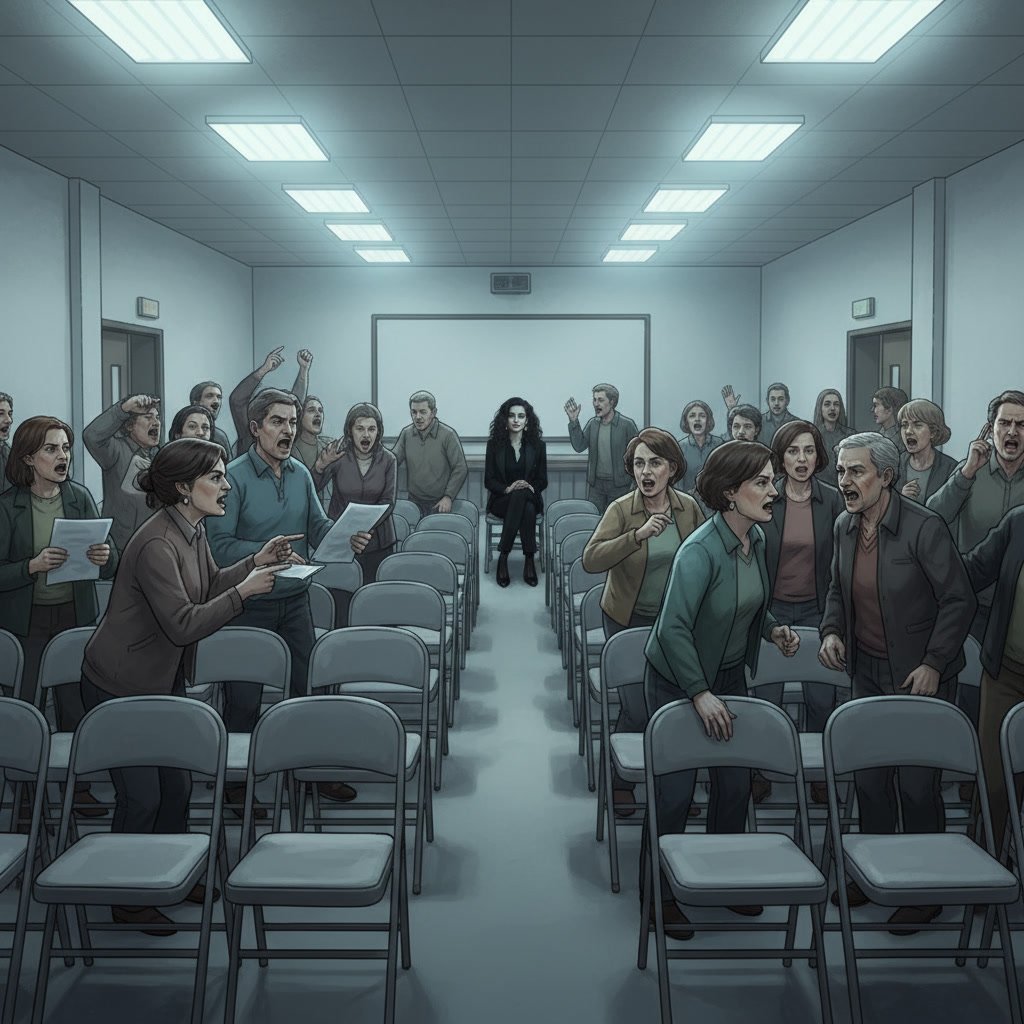
Within minutes, participants had divided into factions.
One group argued that the crow was displaying remarkable intelligence and should be celebrated.
A second argued that intelligence was irrelevant because theft remained theft, regardless of species, and that celebrating it set a troubling precedent.
A third argued that private ownership was a social construct, that the sandwich had therefore never truly belonged to anyone, and that the crow was in fact the only honest participant in the entire transaction.
I paused here to review the video again.
The crow had not appeared to be making a philosophical statement.
The crow had appeared to be hungry.
These are not always different things, but in this instance I believe they were.
The discussion then entered a phase I can only describe as ambitious.
The crow became symbolic.
The sandwich became symbolic.
The theft became symbolic.
A mortal with a profile picture of a lighthouse compared the crow to several historical figures, none of whom I believed were relevant, one of whom I was fairly certain would have objected.
Someone else compared the sandwich to a treaty.
A third party asked everyone to please stay on topic.
This person was ignored.
Soon the participants were debating economic systems, the nature of property, the ethics of hunger, and the intellectual capacity of corvids in a way that suggested none of them had come to discuss a crow at all.
They had come to discuss everything they were already thinking about.
The crow was simply the door they had walked through.
I have seen kingdoms do the same thing.
Conflicts often begin with a tangible object. The object is rarely important for long. People attach larger ideas to it — ideas they have been carrying for some time, looking for somewhere to put them. The original object becomes a flag. The real argument takes place somewhere else entirely, under different colours, about something nobody is willing to name directly.
The crow had become a flag.
The sandwich had become a battlefield.
The crow, for its part, had finished eating and left.
This struck me as the wisest decision anyone had made all day.
Several hours later I encountered a particularly remarkable exchange.
One mortal expressed an opinion.
A second misunderstood it, sincerely and completely, in a way that suggested they had read only the first sentence.
A third misunderstood both of them and introduced a new position that neither of the original participants had held, which then became the position everyone argued against for the next forty comments.
A fourth arrived, assessed the situation in its entirety, announced that everyone involved was an idiot, and departed without elaboration.
I sat with this for a moment.
The fourth participant had contributed nothing to the discussion in terms of content.
They had contributed enormously to the discussion in terms of energy.
Within minutes, the remaining participants had abandoned their previous disagreements entirely and redirected their collective attention toward determining what the fourth participant had meant.
Had they meant all four parties were idiots equally?
Had they meant some parties more than others?
Was the assessment directed at the argument itself, or at the participants as individuals?
Was it, perhaps, a commentary on the medium?
Approximately two hundred comments later, no consensus had been reached.
The fourth participant did not return.
I found this, professionally speaking, extraordinary.
In my experience, generating this level of productive chaos requires preparation. One identifies the fault lines. One applies pressure at the correct moment. One waits.
This individual had walked in, said six words, and left an entire community arguing about the six words rather than anything they had previously cared about.
I considered sending a professional acknowledgment.
I did not know the protocol.
Naturally, I presented my findings during dinner.
Athena requested samples, reviewed them, and said the comment section appeared to function as a low-stakes arena for identity performance rather than genuine discourse.
I told her that was a very clinical way of describing something genuinely alarming.
She said she preferred clinical.
Hermes had already read it. All of it. He had, at some point during my presentation, found the original video, located the comment section, and was now reading selections aloud with the enthusiasm of someone discovering that their favorite hobby had been available this entire time and nobody had told them.
He said the lighthouse person was his favorite.
I told him the lighthouse person was not the point.
He said the lighthouse person was absolutely the point.
Ares asked whether there were rankings.
I told him there were no rankings.
He said there should be rankings.
I said this was not a competition.
He said everything was a competition.
I did not have a response to this either, which was the second time that evening, and which I found significantly more irritating than the first.
Mother had been quiet throughout.
When I finished, she asked a single question.
“Did anyone change their mind?”
The room went still in the specific way rooms go still when a question has been asked that everyone already knows the answer to.
I considered the matter carefully.
Thousands of comments. Hundreds of participants. Several ideological schisms. At least one personal insult involving poultry. An entire secondary argument about a person who had said six words and left.
I could not identify a single instance in which anyone had altered their position.
“No,” I said.
Mother nodded once.
That was all.
She has a gift for making a single nod carry the weight of an entire conversation.
I have been trying to learn it for several thousand years.
I remain, in this respect, a student.
The purpose of the comment section was not persuasion.
No one was attempting to convince anyone of anything.
The purpose was participation. Presence. The act of having been there, of having said something, of having registered an opinion in a space where opinions accumulate like sediment and change nothing and everyone returns anyway.
The argument was the product.
The conflict was not a consequence of the comment section.
The conflict was the reason for it.
I have spent several thousand years treating discord as something that happens to people.
A force. A disruption. An outcome of tension applied at the correct moment.
The mortals appear to have built an entire infrastructure for seeking it out voluntarily.
They have made it a destination.
They visit daily.
Some of them appear to live there.
This is, I will admit, not what I expected to find.
I am still determining what it means for someone in my position.
The most optimistic interpretation is that humanity has developed an appreciation for what I do.
The least optimistic interpretation is that they have found a way to do it without me.
I suspect the truth is somewhere between those two positions, which is, as previously noted, precisely where the most interesting conflicts begin.
The reply-all situation continues to develop.
Athena has advised against investigating.
Hermes has already sent seventeen of them.
Ares has volunteered to help with what he is calling “the escalation phase.”
I have not yet decided whether to get involved.
I have, however, cleared my schedule.